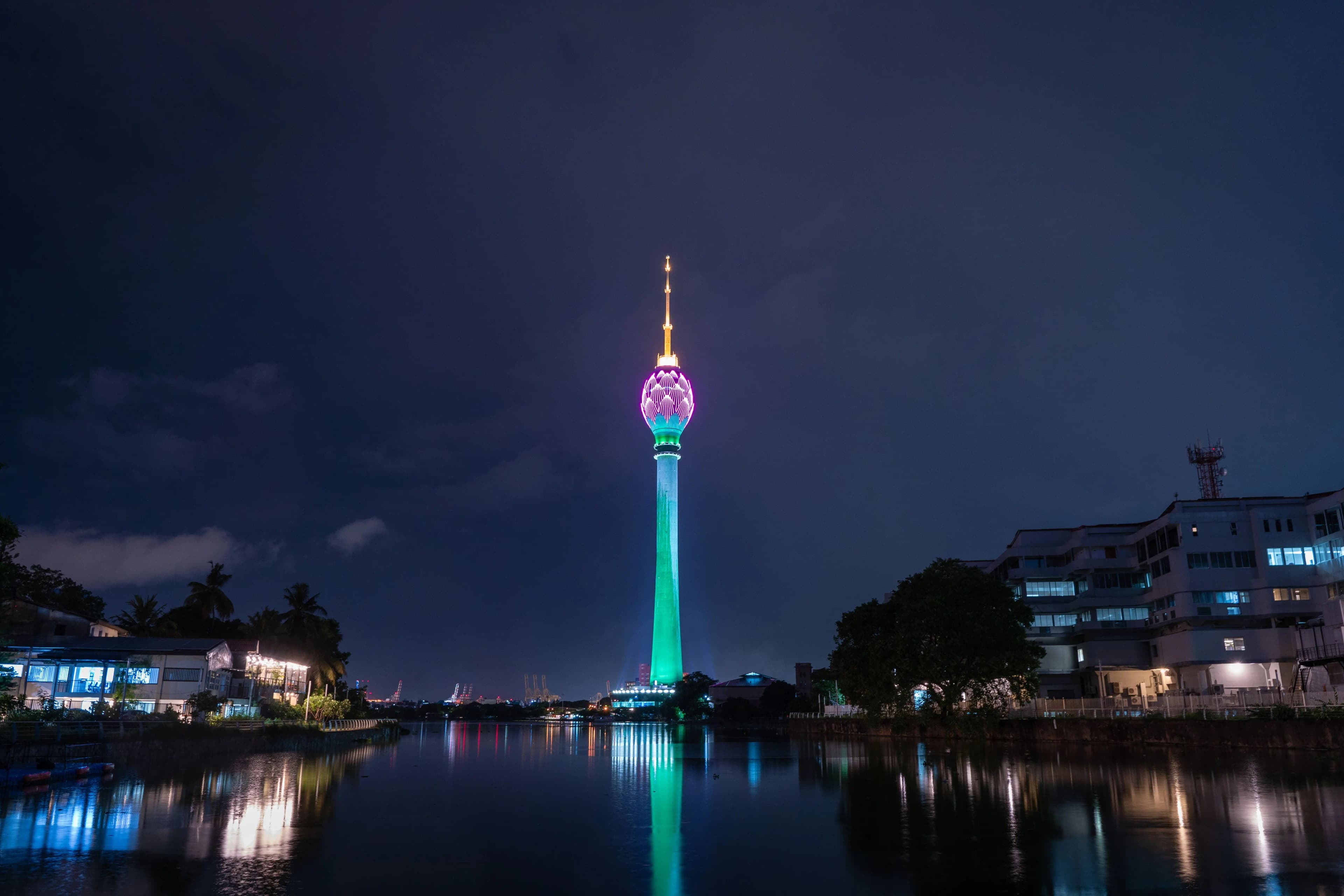
Colombo is Sri Lanka's commercial capital and the primary arrival point for most international travellers. It's a city of contrasts — colonial-era buildings sit alongside gleaming new high-rises, and bustling street markets give way to waterfront promenades.
Colonial and modern landmarks
The Fort area, named for its original Dutch fortifications, is now Colombo's financial heart, with the old parliament building, the Colombo Lighthouse, and the Dutch Hospital — now a shopping and dining precinct. Galle Face Green, a half-kilometre stretch of waterfront lawn, is the city's most iconic public space, popular for sunset strolls and kite-flying.
The Pettah Market is a chaotic and colourful bazaar that sells everything from textiles to electronics, while the National Museum and the Gangaramaya Temple offer insights into Sri Lankan history and culture.
Eating and drinking
Colombo has one of South Asia's most dynamic food scenes. The old Dutch Hospital precinct has upscale restaurants and bars, while street vendors along Galle Road serve fresh kottu roti, samosas and hoppers. The city's growing café culture is particularly visible around Colombo 7 and the Independence Square area.
Our recommendation
Colombo is best visited during the dry season from December to March, although it's a year-round city for business and transit. Spend one or two nights here at the beginning or end of your trip — it's a good place to adjust to the timezone, shop, and sample the city's restaurants.
The coastal train ride from Colombo down to Galle is one of the world's most scenic rail journeys, running parallel to the ocean for much of the route.